
Marcel Déat: The Black Jacobin
by Zoltanous and Nahobino
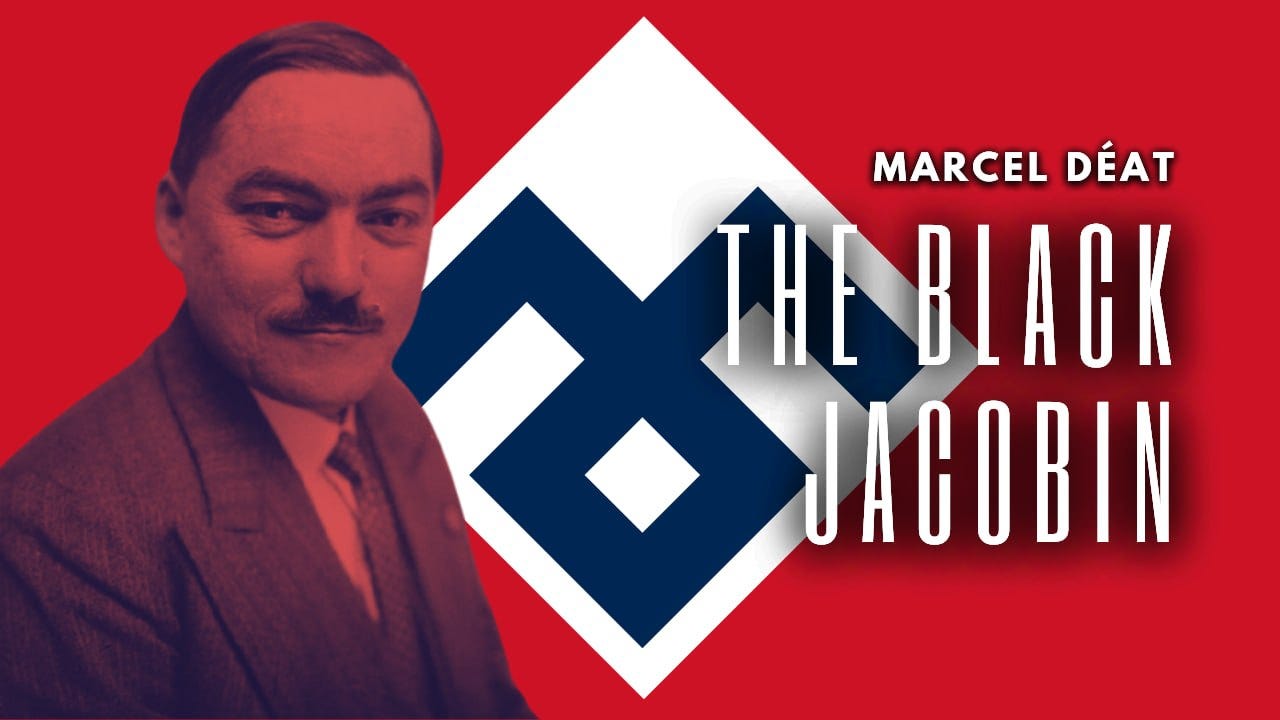
Jacobinism in France has a habit of lying dormant rather than vanishing outright. It withdraws when immediate pressures ease, absorbs new historical realities, and reappears in updated doctrinal forms that promise to mend national divisions, reimpose firm authority, and restore a coherent sense of collective destiny. The original revolutionary regime’s collapse left behind a durable blueprint that later generations could adapt whenever crisis, fragmentation, or governmental paralysis set in. Each recurrence reworked the same core convictions: the absolute primacy of the state, the moral obligation to rally the entire people, and the conviction that power must act decisively when society drifts into disorder. 19th-century republicans, radical socialists, and even technocratic modernizers drew from this reservoir, constructing their programs around a vision of centralized strength capable of forging coherence from a fractured nation. The Jacobin inheritance survived as a standing intellectual arsenal, invoked whenever political actors concluded that national decline could be reversed only through concentrated state power and tightly disciplined collective effort.
This Jacobin inheritance did not remain confined to institutional republicanism. It diffused into a subterranean revolutionary tradition that repeatedly reactivated its central premises under different historical conditions. The Conspiracy of Equals under Babeuf extended the Jacobin logic beyond the Terror by transforming the idea of popular sovereignty into an explicitly egalitarian and insurrectionary project aimed at abolishing property relations through coordinated revolutionary action. Later in the 19th century, Auguste Blanqui radicalized this trajectory further, detaching Jacobin centralization from its original institutional constraints and recasting it as a permanent revolutionary principle embodied in disciplined conspiratorial organization. For Blanqui, political transformation required a concentrated vanguard capable of seizing and wielding state power in the name of historical necessity, a logic that preserved the Jacobin emphasis on decisiveness while stripping it of its republican procedural framework. The Paris Commune of 1871 temporarily reactivated these currents in an urban insurrectionary form, fusing Jacobin civic republicanism with socialist federalism and demonstrating again the recurring tendency of French political crisis to reproduce forms of centralized revolutionary authority under conditions of fragmentation.
In the later 19th and early 20th centuries, this lineage was further refracted through revolutionary syndicalism and heterodox socialist currents that sought to reconcile class struggle with national cohesion. The Conspiracy of Equals and Babeuf’s egalitarian communism carried over into Proudhonian mutualism, which emphasized producer autonomy, federalist organization, and anti-parliamentary direct action. Proudhon’s ideas then fed into Georges Sorel’s revolutionary syndicalism, which stressed myth, violence, and the general strike as instruments of proletarian mobilization outside bourgeois institutions. National interpretations of this current appeared in the Cercle Proudhon, where syndicalist and monarchist thinkers fused anti-liberal critique with calls for organic national order, as well as in the early Italian Fascist synthesis that absorbed Sorelian syndicalism into a type of national syndicalism. This same intellectual field supplied key elements to neo-socialism, producing a broader repertoire in which both left-wing and nationalist movements could draw from shared critiques of bourgeois parliamentary order while diverging sharply on the question of whether coherence should emerge from federation or from centralized state power.
In 1944, during the final phase of the German occupation of France, Marcel Déat’s RNP distributed this propaganda poster. It explicitly claims the entire lineage of French socialism as the authentic origin of the “Socialist and National Movement,” grafting it onto an explicitly Aryan racial framework. The poster features portraits of Saint-Simon, Louis Blanc, Auguste Blanqui, Proudhon, Georges Sorel, and Jean Jaurès, and states in full:
“From this era dates French socialism. Philosophers and theorists such as Proudhon, Saint-Simon, Sorel, Fourier, Blanqui, Cabet, Jaurès, coming from every point on the political horizon — nationalists and liberals alike — understood the contradictions contained within the capitalist regime and envisioned the solutions that could be brought to the new problems.
The Socialist and National Movement is therefore essentially French in origin — and essentially Aryan.”
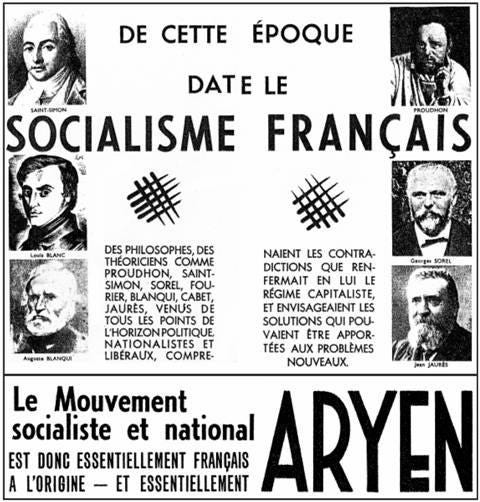
This striking document demonstrates the seamless continuity between 19th-century French socialist thought, including its well-documented antisemitic currents and the wartime collaborationist ideology promoted by Déat and the RNP. By declaring their movement both “essentially French” and “essentially Aryan,” the collaborationists fused Jacobin national unity, neo-socialist corporatism, and Nazi-aligned racialism into a single coherent propaganda message. The Jacobin-statist lineage that Déat inherited carried not only centralized authority but also a submerged current of economic anti-Semitism that had long circulated within 19th-century French socialism. Pierre-Joseph Proudhon gave this resentment one of its earliest and most explicit forms in his private notebooks, branding Jews as the ultimate “anti-producers” and enemies of the human race tied to exploitative finance capitalism. Alphonse Toussenel, the Fourierist socialist, supplied an equally powerful public formulation of the same trope:
“I call, like the people, by the despised name of Jew all the traffickers in money, all the unproductive parasites who, without ever working, live off the substance of the producers…”
— Alphonse Toussenel, Les Juifs, rois de l’époque: Histoire de la féodalité financière
This anti-capitalist, anti-liberal vocabulary equating Jews with financial feudalism and national ruin — provided a ready-made language that could be used once the 1930s crisis and the Occupation removed all restraint. In Déat’s hands the mask came off with startling speed. Pre-war neo-socialism had focused on corporatist planning and class collaboration without overt racial rhetoric; yet by 1941–43, as leader of the RNP, Déat aligned his movement explicitly with the Nazi-Fascist European order. The RNP program now called for protection of the French “ethnic community” against “inassimilable or deleterious racial elements,” and in May 1943 Déat signed the proclamation Vers un État juif, declaring that Europe was ready to offer the Jews “a territory, a state, a nation… on one condition: that all of them reside there.” The 1944 RNP poster that retroactively claimed the entire socialist-revolutionary tradition as “essentially ARYAN” completed the inheritance: Jacobin moral unity and neo-socialist corporatism were now fused with ethnic exclusion. What had been latent economic resentment in French socialism became, under the pressure of collaboration, an operational tool of the Third Position: anti-Marxist, anti-liberal, and fully compatible with the Hitlerian New World Order.
Déat entered this lineage under the stresses of an industrial age marked by economic instability and political splintering. By the early 20th century, this accumulated revolutionary tradition had ceased to belong exclusively to the political left or right and instead functioned as a shared repertoire of state-centered solutions to perceived systemic breakdown. His early formation within the SFIO exposed him to the practical weaknesses of parliamentary socialism, which he came to judge incapable of directing national recovery or preserving social cohesion. As France confronted widespread unemployment, sharpened ideological antagonisms, and the evident erosion of state authority, Déat interpreted these difficulties through the historical pattern the Jacobins had once mastered: a nation divided by competing interests could be reconstructed only by centralized leadership and a single unifying national project. He absorbed their insistence on disciplined rule, moralized citizenship, and state-orchestrated regeneration, then recast those ideas in the language of planning, technical expertise, and modern administrative coordination. This permitted him to present himself as both a critic of routine socialist practice and a restorer of a political tradition that treated national renewal as a task requiring concentrated power rather than incremental adjustment.
Jacobinism had already fashioned a political vocabulary centered on the indivisibility of national sovereignty and the necessity of concentrated authority to render that sovereignty effective. The Revolution supplied a model in which the state functioned as both guardian and active shaper of the collective will, enforcing unity through relentless centralization and moral purpose. This became the defining creed of the state as the engine of national rebirth. The Committee of Public Safety translated that creed into practice by treating every manifestation of political fragmentation as a mortal threat to the nation’s existence and meeting it with an executive that fused administrative control with revolutionary energy. In the decades that followed, French political forces of every stripe reached back to this template whenever disorder threatened. Even declared opponents of Jacobinism absorbed its central teaching: state authority earns its legitimacy the moment it restores unity and directs the nation’s energies toward a coherent historical goal.


Photos of Marcel Déat
What distinguished the 20th-century reactivation of this tradition was not its rejection of earlier revolutionary inheritances, but its consolidation of them into a unified doctrine of state-directed transformation. Fascism did not simply borrow from Jacobin centralism; it absorbed a century of intermediary revolutionary reinterpretations in which Blanquist conspiratorial discipline, syndicalist organizational models, and socialist critiques of parliamentary fragmentation had already converged around the problem of how to impose coherence on mass society. The result was less a linear transmission than a cumulative synthesis, in which earlier revolutionary vocabularies were reassembled into a modern movement of mobilization, planning, and administrative authority.
Fascist thinkers openly claimed this revolutionary inheritance. They borrowed its machinery of centralized power, total national mobilization, and the moralization of politics. As Richard Griffiths demonstrates in his analysis of fascism and planned economies in 1930s France and Belgium, fascist writers consciously effected “the appropriation of revolutionary centralization for national rebirth.” They regarded the Jacobin moment as living proof that the state could compress competing interests into a single organic national body, eliminate the pluralism that paralyzed liberal regimes, and reorganize society under one commanding political will. Déat himself captured this mechanism vividly when analyzing Hitler’s authority:
“[Hitler] commands, and is obeyed. But it is not by right of birth: Adolf Hitler is a humble child from a family possessing neither coat of arms nor ancestry. He works with his hands, he is an unknown infantryman of the Great War: he did not become master and chief by way of military fortune (…), weapons did not help him into power. So what is it exactly? The slow revelation of a people’s identity engendered little by little thanks to Hitler’s political discourse: the irresistible expansion of this warmth and of this flame within him which seizes and embraces millions of men. He commands (…) primarily because he is loved, because the masses recognize themselves in him and discover themselves through him, remembering that they were pulled from the abyss by the force of attraction and hope that resided in him.”
— Marcel Déat, Aspects of a Great Destiny
Fascist economic doctrine echoed this by presenting planning as “a unifying instrument of national consciousness” rather than a neutral technical exercise. Corporatism supplied the updated institutional mechanism for imposing the same moral unity that Jacobin committees had once sought to enforce through revolutionary violence — dissolving class antagonisms and anchoring authority in a state that understood itself as the ethical soul of the nation.
This reinterpretation carried Jacobin themes into a war-torn 20th-century Europe under altered ideological conditions. Where Jacobinism had spoken through revolutionary vigilance and republican virtue, fascism rearmed the identical myth with industrial capacity, bureaucratic precision, and mass political organization. Both traditions refused legitimacy to fragmented publics or unstable parliaments. Both diagnosed social conflict as a pathology produced by weak leadership, insufficient national solidarity, or foreign ideological contamination. Griffiths captures the continuity when he notes that fascist planning rested on “a rejection of both liberal pluralism and socialist class conflict,” substituting the image of the nation as an organic unity steered by an authoritative state. In this scheme the state does not merely administer; it transforms. It assumes the precise role the Jacobins had claimed when they made political authority the instrument of virtue and the guarantor of national salvation. Déat’s own Perspectives socialistes in 1930 made this corporatist line explicit:
“The corporative system… consists of an increasing nationalization of the economy with the collaboration of particular elements of the working class.”
— Marcel Déat, Perspectives socialistes (Paris: Librairie Valois, 1930)
As Zeev Sternhell demonstrates in Neither Right Nor Left, Déat’s doctrinal revisionism in Perspectives socialistes already contained the essential seeds of fascist ideology: an idealist revision of Marxism, the rejection of class struggle in favor of national class collaboration, and the reorganization of society along corporatist and statist lines — the precise “Blackshirt Jacobin” title that would later radicalize under occupation. Through this fusion, fascism extended the Jacobin conviction that the state must serve as an ethical authority. Griffiths emphasizes that fascist planning aimed “to restore the state as an ethical authority,” capable of reorganizing society according to a higher vision of national destiny. This revived the revolutionary premise that power becomes legitimate precisely when it subordinates private interests to collective purpose and remakes the social order through decisive intervention. The fascist adaptation introduced new instruments — corporate bodies, technocratic ministries, propaganda apparatuses — yet the underlying principle remained unmistakably Jacobin: society must be welded together, disciplined, and directed by a sovereign power that interprets the nation’s needs and enforces them as historical necessity.
“Historians of fascism have tended to point to the two ‘planists,’ Déat in France and De Man in Belgium, as typical examples of the common transition from the left to fascism. […] While the planning theories of ‘directed socialism’ were not fascist in themselves, they were contingent upon a strong state, and were also at odds with socialist ideology.”
— Richard Griffiths, Fascism and The Planned Economy: ‘Neo-Socialism’ and ‘Planisme’ In France and Belgium In The 1930s
Interwar France displayed every classic symptom that has historically signaled a Jacobin-style revival: institutional paralysis, economic volatility, and a political culture unable to impart direction to a fractured public. The Third Republic survived the First World War only to emerge exhausted by reconstruction, burdened by debt, and crippled by a parliamentary system that produced governments too weak to confront mounting pressures. Unemployment spread unevenly, rural districts depopulated, and industrial conflict revealed that the economic order lacked both adaptability and legitimacy. The parliamentary arena intensified these tensions rather than resolving them. Cabinets collapsed in rapid succession, parties fragmented, and ideological blocs treated governance as combat rather than responsibility. The result was a state that remained formally intact but hollow in substance, incapable of translating formal authority into effective action.

The RPR flag
The socialist movement mirrored these contradictions with growing sharpness. The SFIO, divided among orthodox Marxists, reformists, and technocratic modernizers, could never articulate a coherent governing strategy beyond opposition to its adversaries. Its parliamentary deputies remained trapped within the same institutions whose gridlock they denounced. Internal disputes over planning, nationalization, and class strategy exposed a deeper uncertainty about whether socialism could actually govern a modern industrial society. Even as economic crisis deepened, the party clung to methods that inspired neither voters nor intellectuals demanding bold intervention. Communist advances on one side and fascist or Third Position leagues on the other made it plain that the political center of gravity was shifting toward movements promising unity and direction.
This environment magnified the appeal of doctrines that rejected fragmentation altogether. The Jacobin model regained relevance because the situation reproduced its original conditions: a widespread conviction that the nation was dissolving into selfish interests and that only concentrated authority could arrest the decline. Fascist movements across Europe reached parallel conclusions, echoing the revolutionary summons to centralized power and national reorganization. Their mass rallies, paramilitary discipline, and public spectacles projected an image of order against parliamentary disorder. French elites, intellectuals, and ordinary citizens registered these signals with varying mixtures of hope and alarm. What mattered most was that the existing system no longer appeared capable of delivering the stability and cohesion the moment required, opening space for radical ideological syntheses.
Déat’s pre-war appeasement stance exemplified this evolving view. In his famous editorial of May 4, 1939, in L’Œuvre, titled “Mourir pour Dantzig?” (“Why Die for Danzig?”), he questioned French commitment to Poland over the Free City of Danzig, articulating a realist skepticism toward collective security and the risks of another European war in defense of distant interests.
Neo-socialism arose inside this vacuum. It addressed socialist disillusionment with parliamentary stagnation and nationalist concerns about France’s strategic position. It supplied a language that treated planning as urgent necessity, unity as the price of modernization, and authority as the sole guarantee of national survival. These themes resonated because the crisis had destroyed the credibility of gradual reform. The idea of a strong state presented itself as the only force able to direct economic recovery and contain political polarization. In this setting the Jacobin tradition reawakened within the socialist left, even as fascist models demonstrated how modern mass politics could translate centralized power into practice. The convergence of these currents made the interwar period fertile ground for Marcel Déat, who undertook to fuse revolutionary statism with contemporary authoritarian techniques and offer the result as the indispensable path to national renewal.
Déat’s break from SFIO orthodoxy began as an internal critique of a party that had lost both the practical instruments and the imaginative vision required to govern a society undergoing rapid structural transformation. His original socialist commitments remained rooted in the demand for collective remedies to economic injustice. Yet he grew convinced that parliamentary methods could never resolve the contradictions created by industrial modernity. The SFIO’s rigid attachment to doctrinal formulas, its deep suspicion of planning, and its reflexive resort to class-struggle rhetoric struck him as relics of an earlier age, wholly inadequate for a landscape shaped by economic collapse, technological advance, and a public demanding coherence rather than ritualistic ideological purity. Déat regarded these shortcomings as structural. A party unable to adapt would never fulfill the historic mission it claimed to carry.
His criticism sharpened as he watched the SFIO’s attachment to parliamentary procedure turn it into a passive spectator of national events rather than an active force capable of shaping them. The party defended institutions the public no longer trusted and relied on moral appeals that no longer commanded obedience. Déat insisted that socialism required an entirely new foundation — one that reframed its principles around coordination, unity, and disciplined organization. In his eyes the working class could never achieve liberation through scattered unions or endless party resolutions; it required a state powerful enough to integrate all social forces into a single national project and impose direction where parliament delivered only confusion. This conviction drove him to redefine socialism away from perpetual conflict and toward an instrument of national regeneration grounded in planning, authority, and a unified economic purpose.
The neo-socialist turn grew directly from this reinterpretation. In his 1930 work Perspectives socialistes, Déat — drawing explicitly on Henri de Man’s planiste ideas, identified planning as the central device through which socialism could become effective in an age of large-scale production and interdependent systems. Planning represented a political doctrine that reorganized society under one common purpose and subordinated individual and corporate interests to the broader needs of the nation. This vision broke sharply with SFIO orthodoxy, which had long regarded centralized planning with suspicion and feared that state authority might threaten democratic norms. Neo-socialists rejected that caution, arguing that the crisis had rendered old distinctions obsolete and that socialism must embrace an organizational form strong enough to confront national disintegration. Authority, once labeled a reactionary symptom, became for Déat the practical tool for constructing a more integrated and rational social order. The 1933 schism that produced the Parti Socialiste de France formalized this rupture, with Déat and his associates championing “Order, Authority, Nation” as watchwords and advocating a directed economy of mixed character between capitalism and full socialization.
This shift brought neo-socialism into close proximity with the authoritarian movements of the era, both of which had reached the same conclusion that fractured societies demanded coherent direction. Déat’s emphasis on planning fitted neatly into the broader European debate on coordinated economies, where fascist theorists were already promoting corporatist organization and state-led development. While neo-socialism retained its socialist vocabulary and commitment to social protection, it borrowed the authoritarian methods that seemed capable of imposing unity where parliamentary systems had failed. The result was a synthesis that preserved the socialist critique of capitalism while abandoning the parliamentary means traditionally linked to socialist governance. Déat framed this change as a necessary adaptation to the modern age, insisting that only a disciplined, centralized, and nationally oriented state could finally deliver the social justice earlier generations of socialists had envisioned but never managed to achieve. In this sense neo-socialism constituted a distinctive Third Position: anti-liberal in its rejection of parliamentary pluralism, anti-Marxist in its repudiation of class struggle as the motor of history, yet committed to social reform through the ethical and developmental agency of the national state.
Déat’s neo-socialist project developed inside a European intellectual climate increasingly preoccupied with the failures of liberal governance and the possibilities of centralized authority. Fascist theorists in Italy, Germany, and Belgium had already shown how planning, corporatism, and hierarchical mobilization could function as instruments of national cohesion. As Griffiths observes, fascist economic planning presented itself as “a unifying instrument of national consciousness.” The practical and moral logic of these programs appealed powerfully to Déat, who recognized in them a contemporary expression of the Jacobin principle that fragmented societies require disciplined direction if they are to survive and fulfill their historical potential.
Neo-socialism selectively adopted these elements while preserving its socialist language. Griffiths notes that fascist theorists sought “to restore the state as an ethical authority,” a conception that Déat directly transposed into his neo-socialist framework. Planning became both a moral instrument and a technical solution to economic interdependence, a method through which the state could enforce unity and synchronize social forces toward a collective purpose. Where the SFIO had hesitated, fearing bureaucratic excess or democratic erosion, Déat embraced centralized decision-making as both legitimate and indispensable. Corporatism, drawn from contemporary fascist theory, supplied models for organizing economic actors into a national hierarchy that subordinated private conflict to the public good, the precise institutional tools neo-socialism needed to make national regeneration concrete.
Griffiths further emphasizes that fascist planning “rejected both liberal pluralism and socialist class conflict.” Neo-socialism internalized this rejection on its own terms, retaining its critique of capitalism and social inequality while discarding the SFIO’s attachment to legislative negotiation and fragmented unionism. The alignment was more practical than purely ideological; neo-socialists borrowed the mechanisms of fascist coordination, mass mobilization, and state-led rationalization without adopting racial or expansionist doctrines. This selective borrowing enabled Déat to construct a socialist project that was disciplined, centralized, and nationally focused while still speaking the language of social protection and reformist ideals.
In practice this absorption of authoritarian techniques appeared in proposals for corporatist councils, technocratic oversight of industrial production, and planning ministries wielding quasi-revolutionary power. Déat’s neo-socialism portrayed the state as both guardian and arbiter, empowered to direct society according to a rational and moral vision of national totalitarian purpose. Planning, once merely a technical adjunct, became the lever for remaking social relations and placing individual and corporate interests under collective priorities. In this way neo-socialism achieved a genuine synthesis: it married the Jacobin concept of ethical state authority to the fascist capacity to implement that authority at industrial scale, producing a model in which socialism could, in theory, act decisively where parliamentary government had failed.
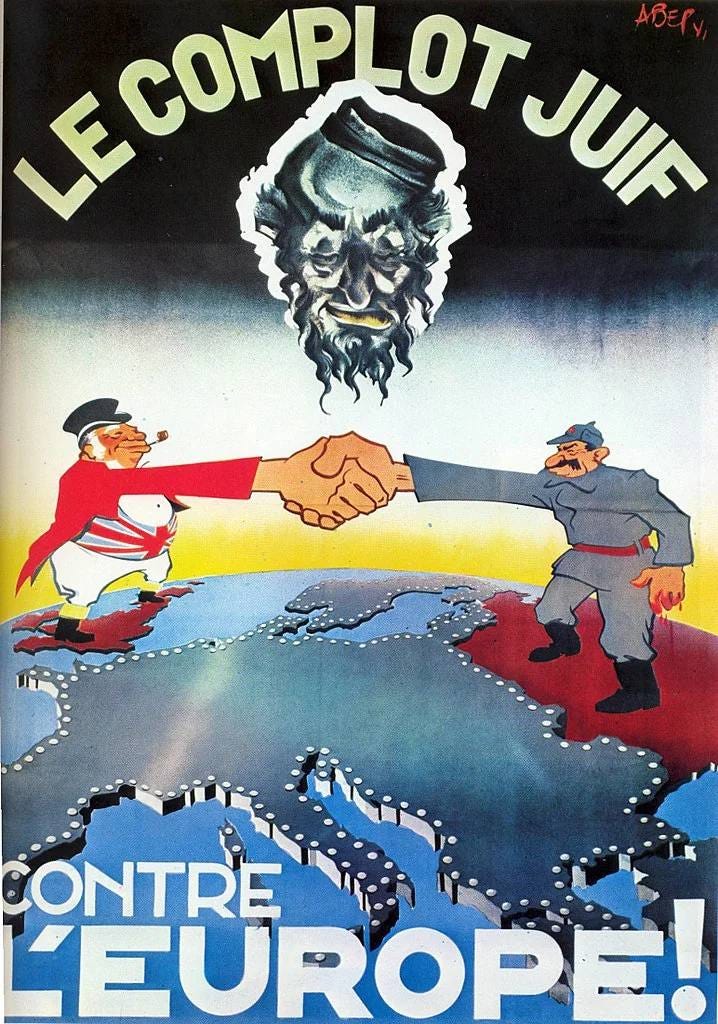
Déat’s own writings reveal the internal coherence of neo-socialism as a doctrine of authority rather than a makeshift response to political collapse. His work consistently treated socialism as a problem of organization, direction, and command, rejecting the idea that social justice could arise spontaneously from parliamentary bargaining or class antagonism. Planning was presented as “a moral project rather than a neutral administrative tool,” an instrument through which the state could reshape social relations and restore national coherence. In Déat’s formulation the state assumes a role strikingly parallel to the one claimed by the Jacobins during the Revolution: the interpreter of collective necessity and the executor of national will. Economic coordination becomes inseparable from political authority, and authority itself is justified by its ability to impose unity. This strand of socialism rejected procedural democracy precisely because it lacked the instruments required for large-scale transformation. Déat’s repeated calls for executive power, long-term planning, and top-down organization flow directly from this diagnosis. His writing treats fragmentation as a systemic danger, not a liberal virtue, and presents unity as the indispensable precondition for any meaningful social reform in a hostile world.
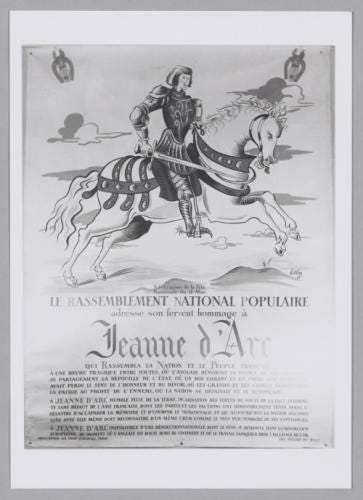
What sets Déat’s approach apart from earlier socialist statism is its explicit engagement with contemporary authoritarianism. Fascist economic theory framed planning as a means of national moral reconstruction, designed to reassert the state’s authority over society as a whole. Déat’s work mirrors this emphasis, though filtered through socialist language and objectives. He avoids racial or biological arguments yet accepts the same premises: social conflict must be subordinated, economic life must be coordinated under a single direction, and legitimacy flows from effectiveness rather than procedure. His texts repeatedly stress discipline, responsibility, and national purpose, aligning socialism with a vision of order that prizes coherence over endless deliberation.
This view appears most clearly in Déat’s treatment of class. While he maintains the socialist critique of inequality, he rejects class struggle as a guiding principle, viewing it instead as a symptom of political failure. Fascist planning explicitly rejected both liberalism and Marxism in favor of national integration. Déat adopts a parallel stance, arguing that the working class cannot achieve emancipation through perpetual conflict but only through incorporation into a unified society under state direction. His socialism therefore becomes integrative rather than adversarial — Jacobin in its moral logic and fascist in its organizational assumptions.
The collapse of the Third Republic created the extreme conditions in which neo-socialist theory could be put to the test. The defeat of 1940 swept away parliamentary government and installed an authoritarian regime justified by national emergency. For Déat and other neo-socialists this rupture merely confirmed their long-standing diagnosis. Parliamentary sovereignty had failed; national survival now required centralized authority, administrative coordination, and top-down reorganization of society. Vichy provided the institutional shell that came closest to meeting those demands, even under German domination.
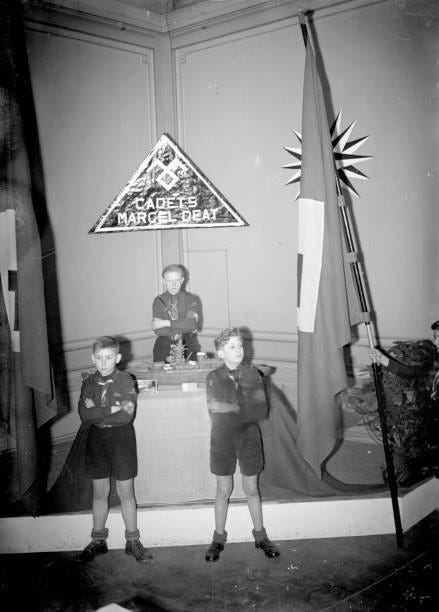
The youth of the RNP
Déat’s support for collaboration with Nazi Germany stemmed less from a wholesale conversion to National Socialism than from a pragmatic political calculation shaped by his neo-socialist worldview. He believed that French sovereignty depended not merely on formal independence but on the state’s capacity to maintain administration, social planning, and political order within a transformed European balance of power. Consequently, collaboration appeared to him as the most effective means of preserving French governmental authority while advancing a national-socialist program on a continental scale. Rather than embracing resistance, which emphasized national honor and rupture with the occupier, Déat favored continuity of governance and saw German dominance as an opportunity to implement long-standing political ambitions. As historian Matthew H. Desan argues, Déat’s fascist trajectory was driven less by the intellectual foundations of his earlier sociological influences than by the repeated frustration of his political aspirations, which ultimately led him to accommodate Nazi power.
In July 1940, Déat argued for the necessity of a single party:
“Like all those other peoples who have carried out their revolution, who have effected their transformation, whether Italy, Germany or Russia, we too need a party, a single party, to define and direct our shared aspirations.”
— Marcel Déat, Rapport présenté à Monsieur le Maréchal Pétain sur la constitution d’un parti national unique
He founded the RNP in February 1941 as a vehicle for this vision, a collaborationist movement that blended neo-socialist rhetoric with explicit alignment to the Nazi-led European project. Déat framed the ongoing conflict not as a conventional war but as a revolutionary one:
“France is taking part… in a revolutionary war: not a crusade of capitalism and the European bourgeoisie against Bolshevism, but a victorious offensive of European socialism… against the Kremlin and its ally, the City.”
— Marcel Déat, L’Œuvre 1940-1941
He presented Nazi ideology itself as compatible with socialist aims, writing in 1940:
“We are not going to construct a new kind of France; we are going to build up a France which will be integrated into the new Europe and will have its own important and legitimate role… Is not the Nazi worldview anti-capitalist, anti-clerical and Socialist?”
— Marcel Déat, L’Œuvre 1940-1941
Déat’s activities in occupied Paris reflected his attempt to fuse French nationalism with National Socialism and a broader vision of European unity. Through his newspaper L’Œuvre, he promoted the idea that France’s future was tied to a Nazi-led European order, contrasting this outlook with the more traditional patriotic themes emphasized by Vichy. The Rassemblement National Populaire’s May Day celebrations in Paris featured strong National Socialist symbolism, including SS participation, which Déat praised as representing a genuine socialist revolution. He encouraged the French public to view May Day as an opportunity to embrace a transformative political and social revolution that would reshape both France and Europe, while arguing that state institutions such as the Ministry of Labour should play a central role in constructing this new order.
“The Ministry of Labour has the task, now, without possible discussion, to build socialism, a positive and realistic national socialism. National solidarity aims to achieve community spirit, to make France a real national community.”
— Marcel Déat, L’Œuvre 1940-1941
Neo-socialist participation in collaborationist institutions reflected this focus on administrative effectiveness and ideological adaptation. Déat’s roles centered on labor organization, economic coordination, and propaganda for social discipline. These activities aligned with fascist policies, particularly the use of planning and corporatism to stabilize society under authoritarian rule while subordinating French efforts to the broader Nazi European domination. Collaboration did not require uncritical adoption of every Nazi racial doctrine; it required acceptance of hierarchical authority, suppression of pluralism, single-party organs, and the subordination of social conflict to state (and now European) direction. Déat’s neo-socialism met those conditions by reframing its Jacobin-derived statism and planiste economics as contributions to a continental revolutionary offensive against Bolshevism and Anglo-American capitalism.
The episode exposed the inner rationale of neo-socialism while revealing its capacity for doctrinal evolution. A doctrine that measured legitimacy by effectiveness rather than consent proved structurally compatible with governance under occupation and with integration into the Nazi new world order. The Jacobin emphasis on emergency authority, once detached from revolutionary sovereignty, could adapt to external domination and to the ideological demands of the occupier. Déat incorporated Nazism by presenting it as the practical realization of national socialist principles on a larger scale: anti-capitalist, revolutionary, and capable of forging the European community, while assigning France a legitimate, if subordinate, role within it. The state retained its moral vocation as the instrument of national and now European regeneration, but its autonomy contracted under German hegemony.
After the Allied liberation of France, Déat fled first to Germany and then to Italy. Tried in absentia by a French court, he was sentenced to death for collaboration and treason. He lived the remainder of his life in exile in Italy under an assumed name, residing in Turin, where he continued limited intellectual and teaching activities. He died there in 1955, never having returned to France. His trajectory demonstrated both the adaptability and the ultimate limits of the neo-socialist ideology: the same commitment to concentrated state power and national (later European) regeneration that had led from Jacobin-inspired critique of parliamentarianism to collaboration ultimately left him without independent political agency once the Nazi order collapsed.
French fascism was never a monolithic bloc. As Eugen Weber observed in Varieties of Fascism, French fascism was socialist in ideological roots and not conservative in inspiration, describing as fascist Georges Valois’s Faisceau (“Communists came to join them”) and Marcel Bucard’s Francistes (which “drew both its elements and its spirit from the left”) but not the Action Française (which was too right-wing) or the Croix de Feu (whose members “simply do not qualify as anything more than patriotic conservatives”). While neo-socialism drew explicitly from Jacobin centralism and planiste techniques, other authoritarian currents defined themselves in direct opposition to the revolutionary state. Figures such as Philippe Pétain and François de La Rocque rejected Jacobinism as the very source of national decay rather than its remedy. Their authoritarianism rested on restoration rather than mobilization, on inherited hierarchy rather than revolutionary unity, and on social order rather than political transformation.
Pétain’s vision of the state stressed organic continuity, tradition, and moral authority rooted in pre-revolutionary logic. His rejection of Jacobin centralism was unambiguous. The Revolution, in his eyes, had produced disorder, abstraction, and the destruction of natural intermediary institutions. Authority flowed downward from historical legitimacy rather than upward from a constructed general will. The Vichy regime’s emphasis on family, rural life, and corporative morality reflected this anti-Jacobin orientation, even as it exercised centralized power in daily practice.
La Rocque’s Croix-de-Feu followed a comparable path. Authoritarian and nationalist, it remained suspicious of revolutionary statism and mass mobilization. La Rocque prized discipline, hierarchy, and moral reform without embracing the Jacobin rhetoric of sovereignty or popular unity. His movement sought order through social stabilization rather than revolution. Unlike neo-socialism, it never attempted to fuse socialism with the state or to portray planning as a transformative moral project.
Neo-socialism diverged sharply from these currents because Déat chose to reactivate the Revolution instead of repudiating it. His authoritarianism was reconstructive rather than conservative. The state was not a custodian of inherited order but an active instrument for reshaping society, first nationally, then within a Nazi-dominated Europe. Where Pétain sought to depoliticize the nation, Déat sought to mobilize it under disciplined direction aligned with the occupier’s revolutionary claims. Where La Rocque distrusted abstraction, Déat embraced it through systematic planning and administrative rationality now oriented toward pan-European integration. These differences explain why neo-socialism aligned more naturally with fascist models that emphasized mobilization and centralized coordination than with traditionalist authoritarianism. In Weber’s terms, it represented one variety of revolutionary doctrine that sought to overcome social fragmentation through organized national and later continental — purpose, a Third Position that retained socialist goals of social protection while adopting the authoritarian instruments of national integration, single-party dictatorship, and state-directed development, ultimately subordinating itself to the Nazi order as the vehicle for European socialism.
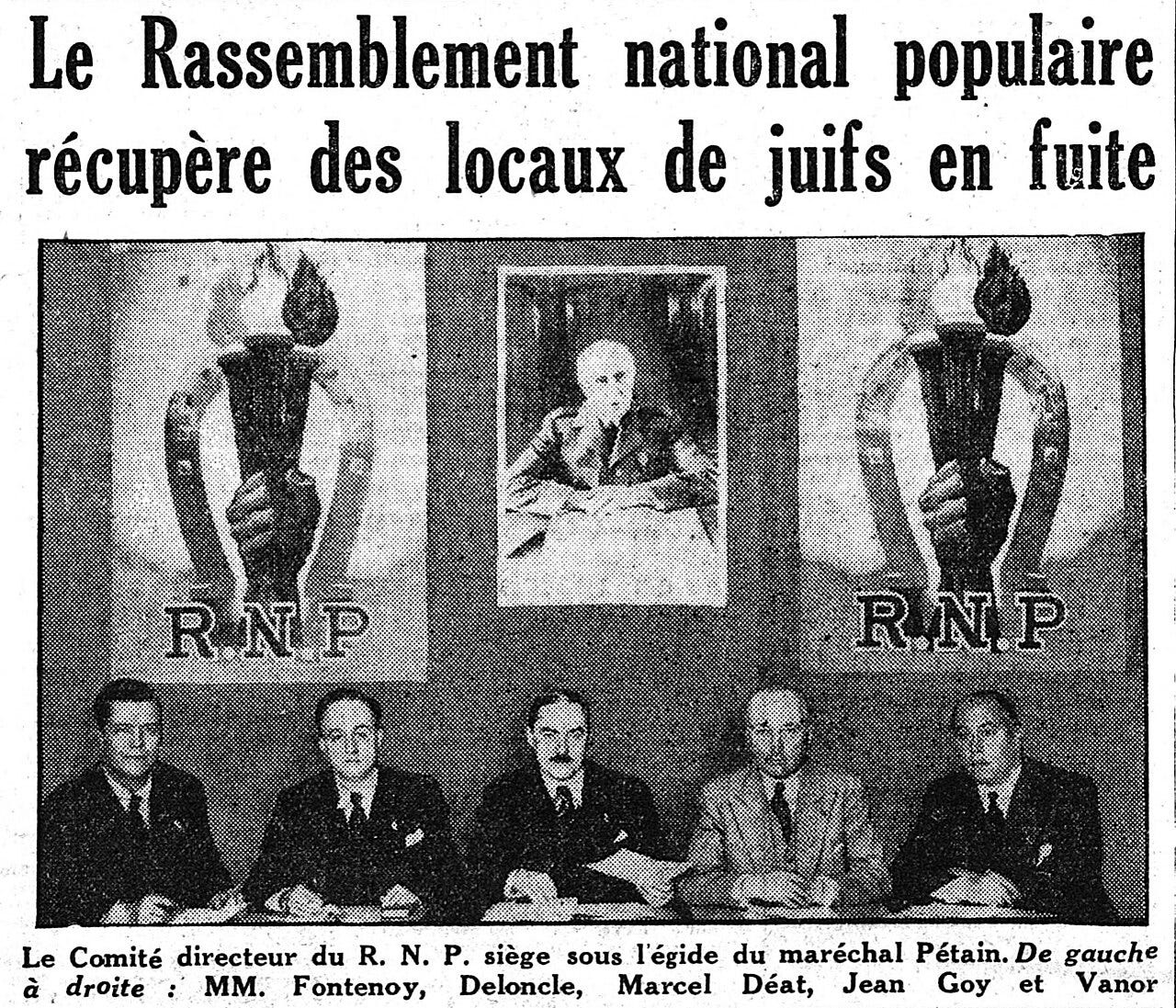
RNP members: Jean Fontenoy, Eugène Deloncle, Marcel Déat, Jean Goy and Jean Van Ormelingen
This contrast clarifies neo-socialism’s distinct place within the French nationalist currents. It was never a backward-looking reaction against modernity but an attempt to master modernity through the state, first in national and then in European form. Its Jacobin inheritance set it apart from conservative-leaning authoritarianisms that dismissed revolutionary legitimacy altogether. Neo-socialism stood at the intersection of socialist planning, fascist organization, and revolutionary statism — a distinctive current whose trajectory can be understood only by recognizing its active engagement with the revolutionary tradition, its adaptation of Nazi and Italian Fascist ideological elements, and its ultimate exhaustion when the external power structure that sustained it collapsed. For one volunteer influenced by his father’s admiration for Déat and reading of L’Œuvre, the international Waffen-SS offered an opportunity to realize this dream of a broader pan-European Socialism:
“My father was a (primary school) teacher. An honest and simple bloke with ideas of his milieu: socialism, peace and Europe… Thanks to him, I discovered Romain Rolland and Germany. I believed the most important thing was to get along among neighbours. I joined the ‘youth hostels’. I discovered there the open air, the sun, friends who came from other countries with their guitars and their songs, and friendship. I was mobilised in 1939. I waged war in an atmosphere of disorder and cowardice which would not stop until the defeat… I returned to my region, a small sub-prefecture on the banks of the Loire. My father still continued to read L’Oeuvre, just like before the war. He admired Marcel Déat. I found he was right sometimes, but the masquerade imitated from the Germans did not really tempt me. Those coloured shirts, those shoulder-belts, those bérets basques that seemed to me small and mean, in a word French. What interested me was Europe. Not Germany, Europe. [And] Socialism that spanned a whole continent. I was still not a militarist, but I believed we had to win the war against the communists who I had never liked, and against the capitalists I had always detested. The LVF did not tempt me because of its tricolore side. And besides it had too many regulars and doriotistes. In the Waffen-SS, I hoped to find an international army and a sort of socialism in poverty, courage and voluntary discipline.”
— Robert Forbes, For Europe: The French Volunteers of The Waffen-SS.
The enduring legacy of Marcel Déat lies in the ideological current he helped crystallize: Jacobinism turned into a national socialist conceptions of planning, community, and centralized authority, articulated as a Third Position between liberalism and Marxism. This view, which envisioned national regeneration through disciplined state intervention, totalitarianism. and European reconfiguration on sovereign terms, continues to resonate in certain strands of modern French nationalism. Elements of Déat’s vision — particularly the emphasis on national solidarity, the use of anti-capitalist rhetoric within nationalism, and the demand for effective executive direction over parliamentary routine, reappear in debates over sovereignty, economics, and cultural identity, even among currents that explicitly repudiate his collaborationist legacy. His trajectory ultimately underscores the persistent attraction of concentrated state power as an instrument of collective renewal.
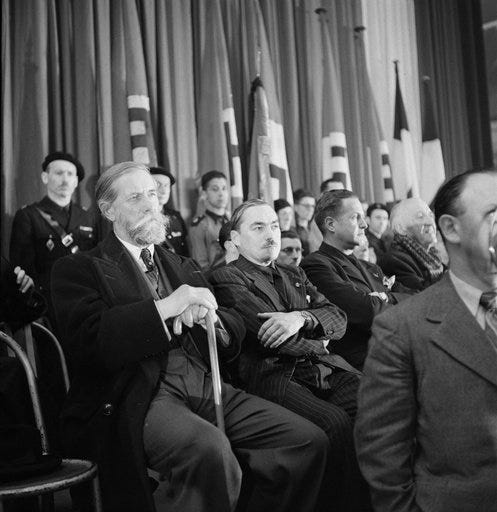
Alphonse de Châteaubriant, Marcel Déat, Marcel Bucard and Paul Chack during a meeting of the short lived National Revolutionary Front at the Vélodrome d’Hiver on the 11th of April 1943